Constantin, EasySubmits founder
Quick answer
Directory link building means earning links through relevant product or business listings. Start with audience fit and useful listing pages, then check the actual links and results.
What a directory link can and cannot do
A directory listing gives your product another page where someone may discover it and click through to your website. That is the direct use case. The page can also contain a backlink, but the existence of a link does not tell you how much traffic it will send or how a search engine will treat it.
Separate the three outcomes people often mix together: being listed, receiving referral visits and improving search visibility. You can confirm the first by opening the page. You can investigate the second in analytics. The third requires a broader view of your website, queries, competing pages and changes over time.
A software directory with real comparison pages may introduce your product to people who already need that kind of tool. A generic directory that exists mainly to sell placements may not reach the same audience. Neither a familiar brand nor a third-party authority score removes the need to inspect the listing format.
Use the SaaS directory list to find candidates, then evaluate each one for your product. A thoughtful small batch makes it easier to check the actual pages and learn what useful discovery looks like.
Choose the right audience before the highest score
Ask who would browse the directory and what they would be trying to solve. If your SaaS helps engineering teams, a developer-focused collection may be more useful than a broad small-business category. If it serves restaurants, a relevant industry platform may be more useful than a list of unrelated AI tools.
Read a category page as a potential customer. Can you compare products by purpose, platform, pricing or features? Are the descriptions understandable? Is there a clear route to the product website? Those observations help you judge whether a listing could contribute to a buying decision.
Also check whether your product belongs in that category at all. A directory can accept a form without creating an accurate comparison. Choosing an unrelated category to chase a link can confuse visitors and make the page less useful for everyone involved.
Write down the reason for including each candidate. A useful reason is something concrete, such as a relevant category, an audience that matches your customers or a listing format that explains your workflow. “High DR” by itself leaves the most important question unanswered: why would a buyer find you there?
Inspect real listing pages before submitting
Open several existing product listings from the category you would use. Look at the amount of product information, the quality of navigation and the relationship between the directory page and the vendor website. A directory homepage may look polished while individual listings contain little useful information.
Check whether listings have stable public URLs and can be opened without an account. Look for active products and accurate links, but do not assume an old page is worthless just because it has not changed recently. A maintained tool may have a simple listing that still serves its purpose.
Notice whether the directory reviews submissions, lets owners edit entries or offers a way to report mistakes. These processes matter because the page may need changes when your product evolves. Save the official editing or claiming instructions, not just the initial submission form.
You do not need to diagnose every technical detail before trying a relevant free listing. Focus first on obvious problems: broken links, unrelated categories, empty pages and a confusing path to your product. If the page is hard for you to use, a potential customer may have the same problem.
Understand follow, nofollow, sponsored and UGC links
The words used to describe a backlink often get treated like a quality ranking. They are not a complete assessment of a directory. A useful listing can send customers through a nofollow link, and a normal link on an irrelevant page can send nobody.
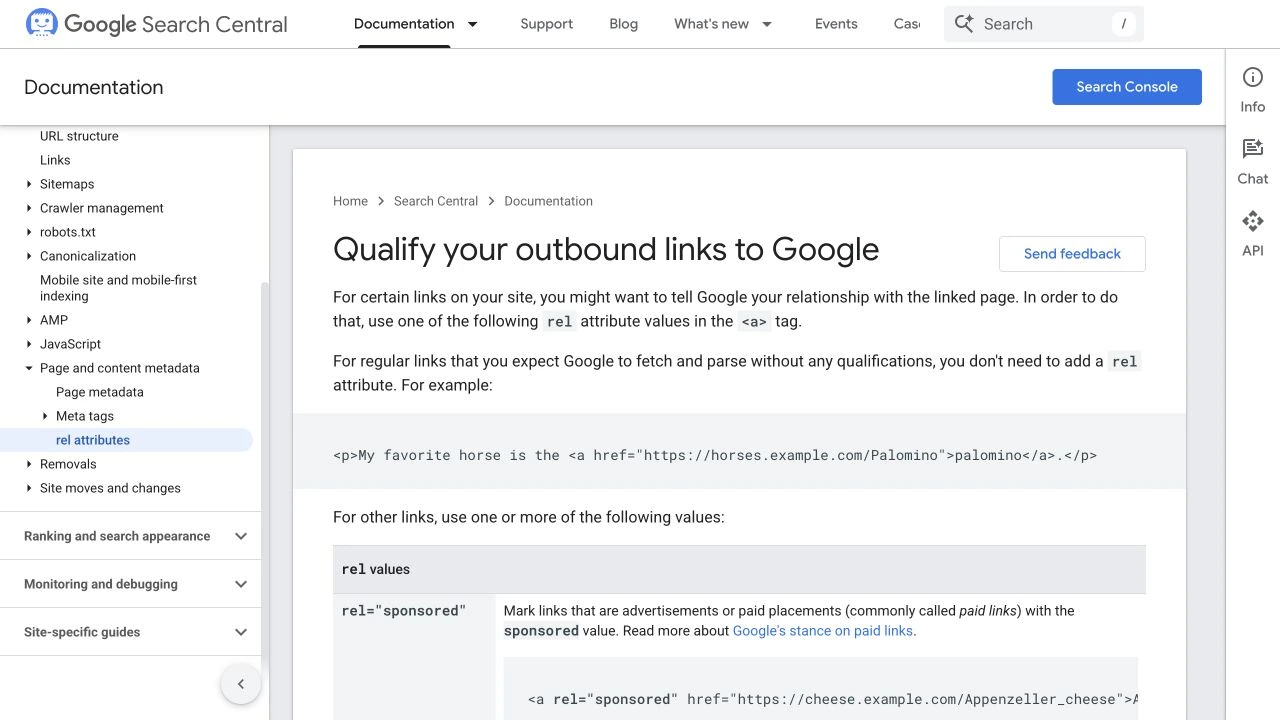
A standard link has an href pointing to a destination. Websites can add rel attributes to describe the relationship. Google's documentation explains sponsored for advertising or paid placements, ugc for user-generated content and nofollow when other relationship values do not apply and the site does not want Google to associate it with or crawl the destination through that link.
People often call a normal link “dofollow”, although there is no special dofollow attribute you need to see in the HTML. If you want to check a link, inspect the published product page and its actual anchor element. Do not rely on a label attached to the directory homepage.
Record what you observed, including the listing URL and date. Sites can change their templates and links over time. Keep that note separate from the submission status, since an approved listing can still use any of these link relationships.
| Link relationship | What to inspect | What it does not establish |
|---|---|---|
| Normal link | href and any rel values | Guaranteed rankings or traffic |
| nofollow | rel includes nofollow | That the listing cannot send customers |
| sponsored | rel includes sponsored | An editorial endorsement |
| ugc | rel includes ugc | Whether the product fits the audience |
Use Domain Rating as context, not a purchasing rule
Domain Rating is Ahrefs' measure of the relative strength of a website's backlink profile. It is a domain-level benchmark, so it does not describe the usefulness of a specific directory listing or the number of qualified customers that page might send.
You can use our Domain Rating checker when comparing candidates, but keep the score beside the audience and listing notes. A directory with a higher score can still be a poor fit for your product. A specialized site can still be worth considering even if its backlink profile is smaller.
Use the same metric when making a comparison. Ahrefs DR and Moz Domain Authority are calculated by different providers. Treating them as interchangeable values makes a neat-looking spreadsheet less meaningful. Record the provider if you keep an authority column at all.
Ahrefs has to discover and process links, and the metric depends on the wider backlink index. Check referrals and approved listing pages directly rather than using one score change as proof that a batch succeeded or failed.
Evaluate paid directory listings
A directory may charge for a listing, a faster review or extra visibility. Before paying, identify what the payment actually buys. Review speed is different from approval, and a featured position is different from an independent recommendation.
Read the offer and look at the placement a buyer would receive. Is it on a relevant category page? How long does it last? Can visitors compare your product and click through? Are you paying once or starting a subscription? These are basic purchasing questions that a backlink score cannot answer.
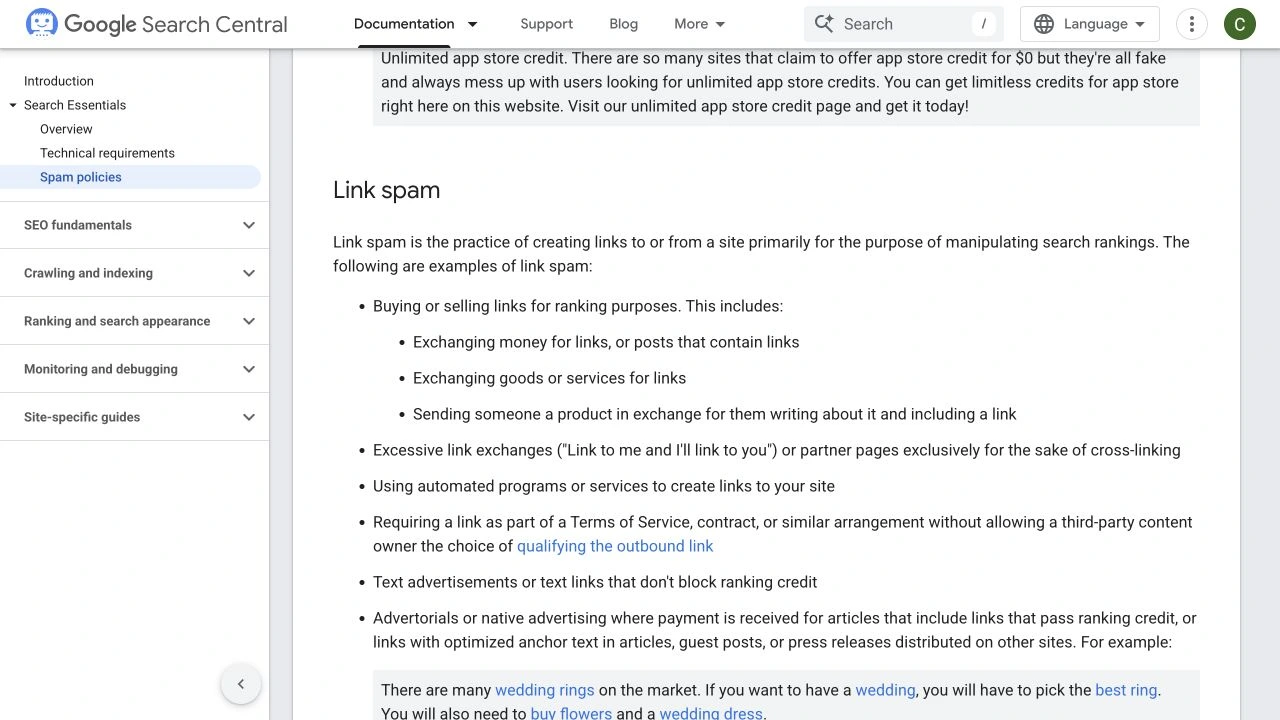
Google's spam policies explicitly include low-quality directory links among link-spam examples. That is a reason to avoid choosing placements primarily to manipulate rankings, not a reason to assume every product directory is prohibited.
Keep a separate budget for paid directory fees and compare them with the value you expect from exposure to that audience. If the directory cannot explain its placement or the terms are unclear, do not fill the gap with a traffic forecast. You can often test relevant free routes first.
Make the listing useful once you earn the space
Getting accepted is only the start. A reader still needs to understand what the product does, who it is for and whether to visit your website. Use a clear description, an accurate category and current screenshots that explain the main workflow.
Avoid writing the same claim in every field. If the name field already identifies the product, use the tagline for its main purpose. Use the longer description for audience, workflow and important constraints. The directory listing SEO guide provides practical examples of this division.
Keep pricing and feature claims aligned with your landing page. A listing that advertises an old free tier or a feature you removed can attract the wrong visitors. That mismatch also makes it difficult to tell whether a directory sends qualified people or whether the listing itself creates confusion.
Link to the page that answers the visitor's next question. Usually that is the product homepage, but a platform may ask for documentation or a demo as well. Use stable URLs and keep an owner record so you can update the listing when the product changes.
Measure a small batch before expanding it
Work through a batch you can review properly. Keep the approved listing URLs, link observations and next-action notes together. Our submission guide covers a simple status tracker so the record distinguishes a received form from a public page.
Use your analytics to look for visits from relevant directories and the actions those visitors take. A small number of visits can be useful if they become demos or customers. A larger number can be unhelpful if visitors misunderstand the product and leave immediately.
For search performance, compare a reasonable period of data and look at queries and pages rather than just a single total. New content, product changes and other links can affect the same period, so avoid attributing every movement to directory work. Keep the interpretation honest when you cannot isolate the cause.
Use what you learn to update the shortlist. Maintain listings that represent the product well, fix outdated ones and deprioritize destinations that consume time without a clear reason. More submissions are not the only way to improve an existing batch.
Decide what you want a submission service to handle
If you outsource the forms, keep the evaluation criteria with the task. A service should know the product category, intended audience and any destinations you want to handle yourself. The goal is a useful set of relevant submissions, not a count disconnected from the product.
Ask for a report that identifies destinations and submission status. You should be able to separate completed submissions, owner actions and published listings.
With EasySubmits, you can choose the DIY list or manual submission packages. Manual submissions save the form-filling work, while the report gives you a record to follow up. The directory remains responsible for its editorial decision and publication timeline.
Keep the work tied to the product's actual acquisition goals. A useful directory strategy can support discoverability and provide another route to customers, but it does not replace a clear website, useful content or a product people want. The best next batch is the one you can justify from audience fit and observed results.
Questions and answers
They can be part of a relevant discovery strategy, but their value varies. Inspect the product category, listing page and actual link. Low-quality placements chosen to manipulate rankings are different from useful software listings.