Constantin, EasySubmits founder
Quick answer
Product Hunt alternatives include launch communities such as Uneed and Microlaunch, early-stage discovery sites such as BetaList, and software directories such as AlternativeTo and SaaSHub. Choose by the kind of visit you need: launch feedback, early access requests or ongoing product discovery. A directory listing does not replace an active launch.
Choose the outcome before the platform
Start with a concrete goal. You might need five people to try an unfinished workflow, a first group of paying customers or a public page that explains your software alongside similar products. Those goals lead to different platforms. A launch feed can put a product in front of makers for a short period. A software directory can leave a discoverable listing available after launch day.
Write down who should click through and what they should do next. For a developer API, a useful visit might end in a documentation view or a test request. For a consumer app, it might be a completed signup. For an early prototype, a thoughtful message from a suitable tester can be worth more than a large number of anonymous visits.
Avoid choosing from a leaderboard of claimed traffic. Check whether people with your problem actually use the platform, whether similar products have understandable listings and whether your landing page can serve those visitors. Our startup directories and AI directories separate two audiences that often get mixed into one generic launch list.
The official links let you check the submission process before investing time or money.
Compare Product Hunt alternatives by format
The table groups options by the job they can do. It is not a list of interchangeable launch services. Review the actual rules and available packages on the official website, because schedules and submission prices can change. A platform that fits your product today may need a different approach when you release a larger version.
Pick one launch format and a small number of lasting listings for an initial experiment. That gives you time to prepare useful assets and answer questions. If you submit everywhere at once, a weak result is difficult to diagnose: the audience, description, landing page and timing have all changed together.
Keep a spreadsheet with a column for the next action. “Read criteria,” “prepare maker profile” and “submit listing” are more useful than a vague “launch here.” Record who owns the account and which actions the founder must complete. This matters when someone else helps with routine directory submissions.
| Platform | Format | Prepare before you visit |
|---|---|---|
| Uneed | Tool discovery and launches | A clear product pitch and launch assets |
| Microlaunch | Product launch platform | A working product and time for visitor questions |
| BetaList | Early-stage startup discovery | A public startup site and eligibility check |
| AlternativeTo | Software alternatives directory | Comparable apps, supported platforms and accurate tags |
| SaaSHub | Software discovery and comparison | Product details and a relevant category |
Uneed and Microlaunch for an active launch
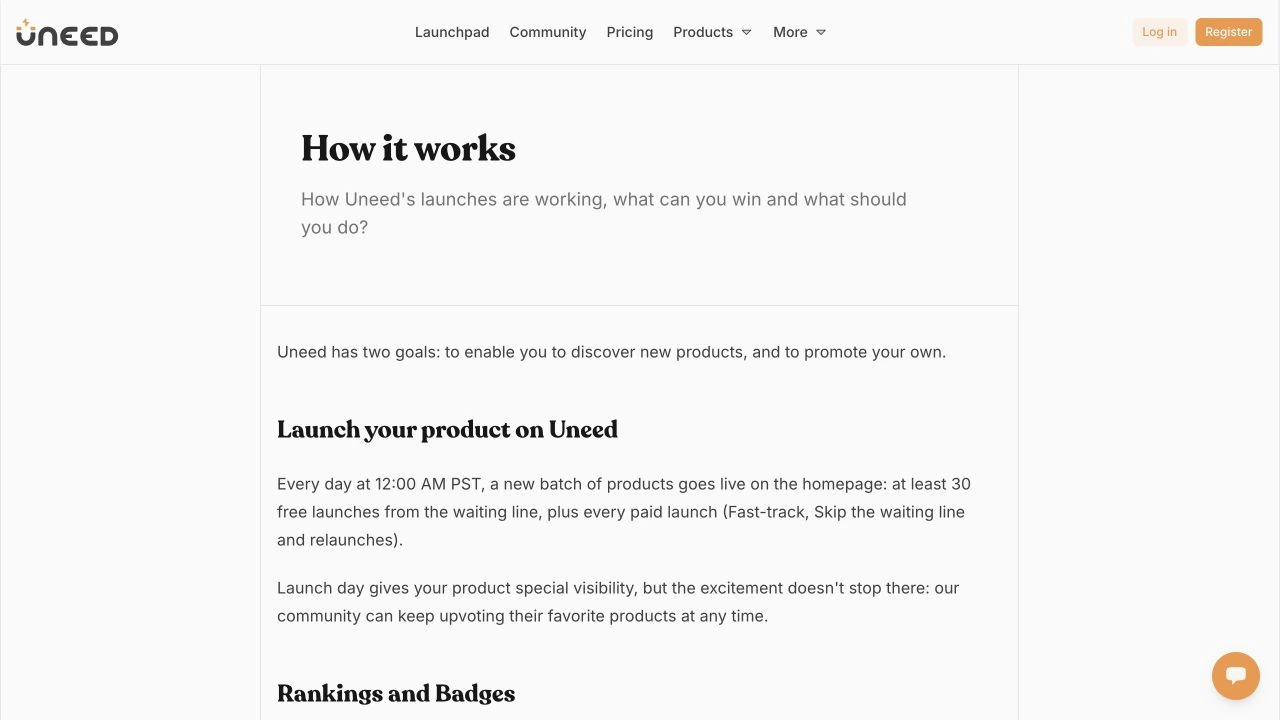
Uneed publishes an explanation of its launch process. Read that before submitting so you know what the platform expects. Its official help center also provides a product submission walkthrough. Use those instructions to prepare the actual fields rather than recycling a checklist from an old third-party article.
Microlaunch is another product launch option. Review its current launch format, visible product pages and account requirements. Keep the platform’s own process separate from assumptions about how Product Hunt works. Similar-looking product cards do not mean the timing, promotion or audience is the same.
For either option, plan to be available when visitors arrive. A clear answer about supported integrations, pricing or a missing feature can help someone decide whether to try the product. Set aside time for that work instead of treating the submission form as the whole campaign. Keep an honest record of questions you cannot answer yet.
Choose an example that demonstrates the product in use. A short sequence of input, action and result gives a visitor something to understand. A collection of abstract brand images does much less. Test the signup flow, the help link and the demo before launch. The best-prepared listing cannot rescue a broken first visit.
BetaList for early-stage startup discovery
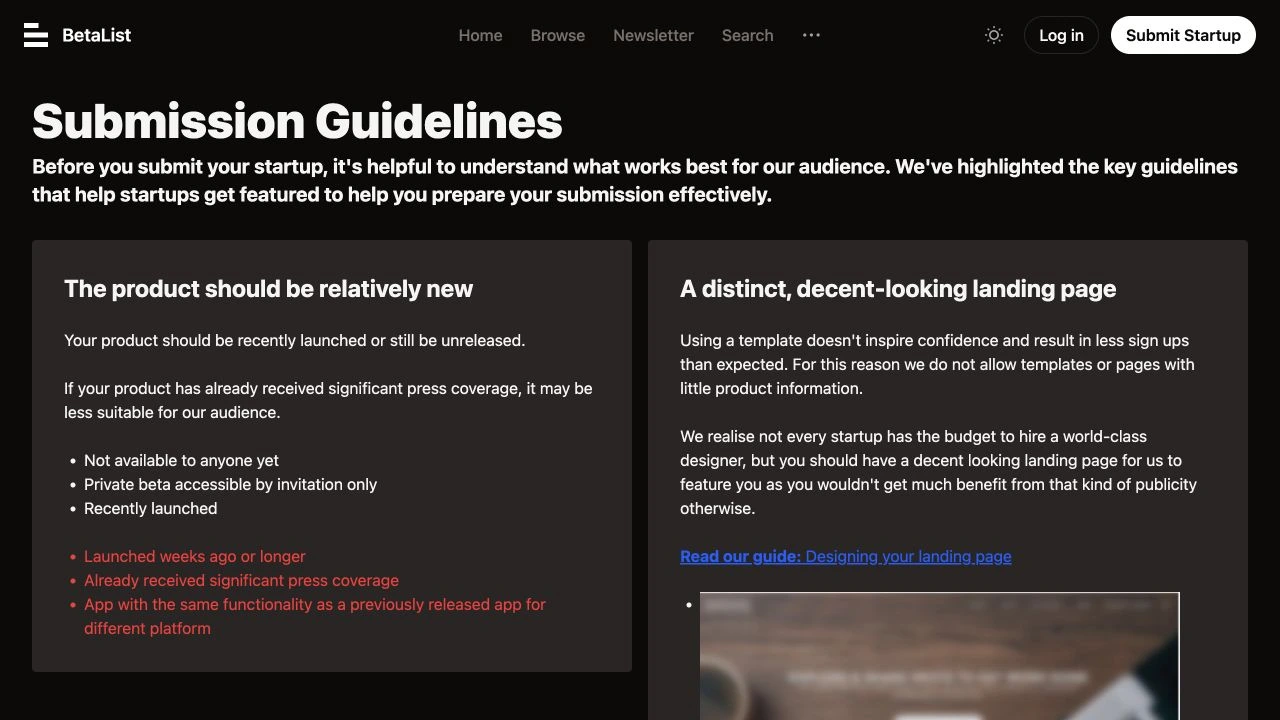
BetaList’s submission guidelines are the starting point for this option. Its official support pages say startups need their own domain rather than a free hosting subdomain or a direct app-store link.
Use your landing page to show what is available now. If the product is in early access, explain how people get access and what feedback you need. If it is only a waitlist, say so. Screenshots and pricing should describe the version visitors will encounter, not a future release presented as already finished.
Write a concise explanation of the problem and the product’s approach. A reviewer should not need to infer the use case from a slogan. Include a monitored contact address and a working public URL. Check the product’s name and description against your own website before submitting so the two pages do not contradict each other.
Track the submission separately from the listing. Save the confirmation and any request for more information. If the platform asks you to change something, record that task rather than sending repeated forms. After publication, check where the listing link lands and whether the description still matches the product.
AlternativeTo and SaaSHub for lasting listings
AlternativeTo organizes software around alternatives and related products. Its official FAQ explains how to suggest an application and how review works. That makes it a different fit from a launch feed: the useful question is often which existing tools a customer might compare with yours.
Prepare accurate platform support, licensing and categories. Do not add unrelated competitors just to borrow attention. If the app already has a page, investigate the edit or claim process instead of making a second entry. A clean listing is easier for a future customer to understand and easier for your team to maintain.
SaaSHub provides another software submission route. Check the current form and any account requirements directly. Your description should explain a business task and the kind of customer it serves. Use the product URL where a visitor can learn about or try the software, rather than a temporary campaign page that will disappear.
These listings can complement a launch. They do not reproduce a launch community’s discussion, schedule or voting format. Keep them in a separate part of your plan. Our broader SaaS directories resource helps you find more candidates without assuming every directory is a Product Hunt replacement.
Prepare one brief, then adapt it
Create a short source document with the product name, public domain, one-sentence pitch, longer description, pricing model, contact email, logo and screenshots. Keep the factual version in one place. When a platform asks for a shorter field, cut the wording without changing the underlying claim.
Describe the audience specifically. A scheduling product for dental practices is different from a general calendar app, even if both can book meetings. Mention the relevant workflow and supported use case. If your product relies on an AI model or third-party service, describe what the finished app does rather than presenting access to that provider as the whole benefit.
Prepare screenshots that remain readable as thumbnails. Hide customer information and remove browser tabs that reveal private accounts. A reviewer should be able to understand the example without logging into your account. If a live demo is necessary, use a stable public demo or follow the platform’s stated access instructions.
Our directory listing SEO guide explains how to maintain consistent details without stuffing keywords into the product name. For the mechanics of routine forms and tracking, follow the submission guide.
Measure what happens after the click
Record a baseline before the launch. Note current referral visits, signup starts and meaningful activation events. Choose the few events that describe success for this product. A product with a free trial may care about a first completed task more than the raw number of new accounts.
After the launch, compare visitors from the platform with that baseline. Use consistent campaign parameters where allowed, and inspect referral information when it is available. Some platforms change links or remove parameters, so do not assume your attribution spreadsheet is complete. Ask new customers how they found you when that question fits the onboarding flow.
Look at the landing page as part of the experiment. If visitors arrive but cannot understand the offer, a second launch may repeat the same problem. Review the questions people asked, the points where they stopped and whether the signup process worked. Fix those issues before spending more on placement.
Keep cost and effort visible. Include platform fees, asset preparation and time spent answering visitors. An option with no submission fee still takes work. Compare the resulting conversations and product usage, then choose whether to repeat, maintain the listing or move to another audience. Avoid turning a temporary spike into a long-term revenue forecast.
Choose your next submission step
For a first launch, choose the platform whose audience and process fit your current product. Read its official instructions, prepare the required assets and test the customer journey from the listing to the first useful action. Save the plan somewhere a teammate can follow without guessing what “launched” means.
If your main need is broader directory coverage, start with a small relevant shortlist and a submission tracker. If you need feedback on an unfinished product, choose a setting where you can speak with appropriate testers. If you want a launch discussion, be ready to participate. Those are different jobs even when the websites appear in the same alternatives article.
EasySubmits handles relevant directory submissions and supplies a report. It does not run Product Hunt launches for you. Compare the service plans with the work you need, and keep any owner-only actions with the person who can complete them.
Questions and answers
Uneed and Microlaunch are launch options to investigate. BetaList focuses on startup discovery, while AlternativeTo and SaaSHub offer software listings. Choose the format that fits your goal rather than treating them as identical.